Featured Research: What Shapes Women's Contraceptive Use in Eastern Uganda?
A featured research spotlight on a qualitative study examining how gender norms, partner opposition, side-effect concerns, community beliefs, and service delivery barriers shape women's contraceptive use in eastern Uganda.
In this guide
Why this study matters
Good research helps us understand why public health challenges persist even when services technically exist.
This featured study by Namasivayam, Schluter, Namutamba, and Lovell examines the contextual and cultural influences on women's modern contraceptive use in the Busoga region of eastern Uganda. Published in PLOS Global Public Health in 2022, the study is useful because it moves beyond a narrow question of whether contraceptives are available. Instead, it asks what women must navigate before they can use contraception in real life.
For researchers, students, and programme teams working on sexual and reproductive health, this paper is a strong example of how qualitative methods can illuminate barriers that routine indicators may miss.
What the study did
The researchers conducted a qualitative study in the Busoga region of eastern Uganda, a setting selected because of low contraceptive prevalence and high unmet need among married women of reproductive age.
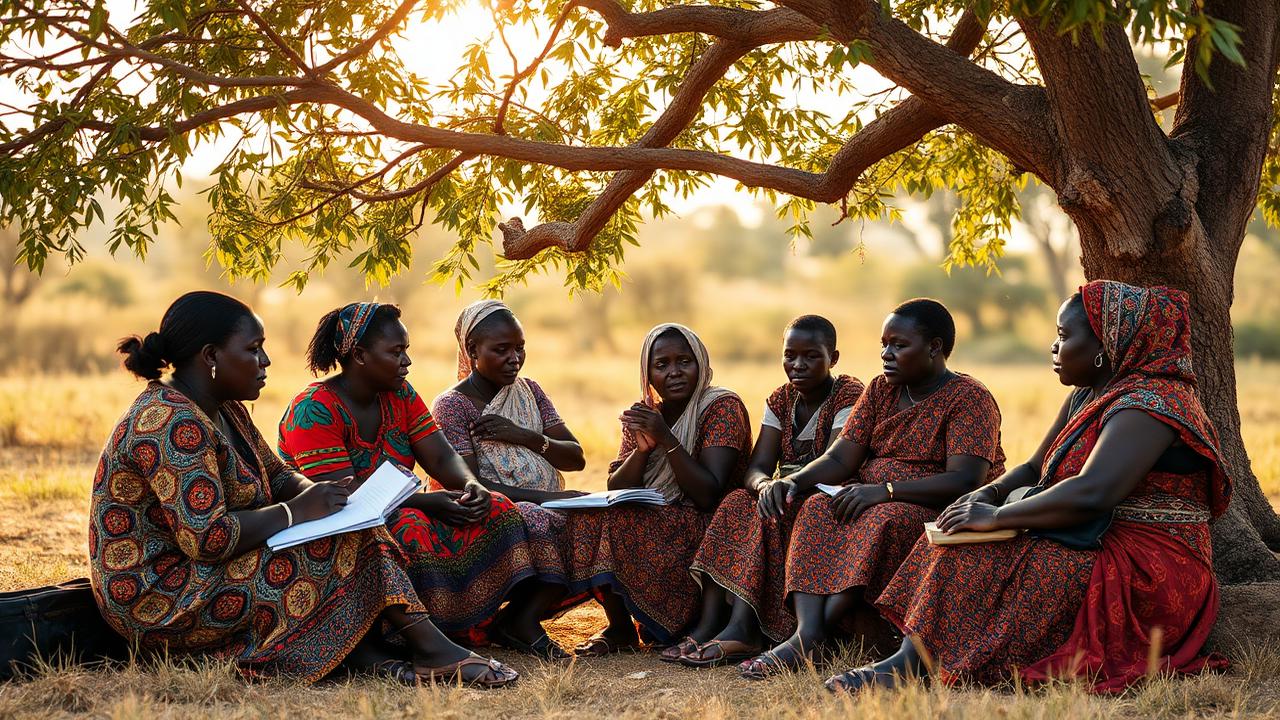
The study used six focus group discussions with single and married women across different age groups: 18–24 years, 25–34 years, and 35 years and above. Participants were drawn from three urban and three rural districts in Busoga.
This design allowed the researchers to explore how contraceptive use is shaped by women's social context, relationship dynamics, community beliefs, and health service experiences.
What the study found
The study shows that contraceptive use is not shaped by one barrier alone. Women's decisions were influenced by several interacting factors, including gender norms, partner opposition, fear of side effects, community beliefs, stigma, and limitations within health services.
One important contribution of the paper is that it presents contraceptive decision-making as relational and contextual. Women were not simply choosing whether or not to use contraception in isolation. Their choices were shaped by partners, families, community expectations, previous experiences with methods, and the way services were delivered.
The paper also highlights how side-effect concerns can become powerful barriers when women do not receive enough counselling, reassurance, or follow-up support. In practice, method availability alone is not enough if women do not feel informed, supported, and able to manage side effects.
Another important finding is the role of male partners and gendered decision-making. Partner opposition, fear of conflict, and expectations around fertility influenced women's ability to use contraception openly and consistently.
Why it matters for programmes
This study is a useful reminder that improving contraceptive uptake requires more than increasing commodity availability. Programmes also need to address the social and relational conditions that shape women's reproductive choices.
Practical implications include strengthening counselling on side effects, supporting respectful and confidential services, engaging men without reducing women's autonomy, and using community-level approaches to address myths and stigma.
The study also points to the value of listening carefully to women's own explanations of contraceptive use and non-use. Programmes that assume the problem is only lack of information may miss deeper barriers related to power, trust, acceptability, and lived experience.
Methods note
This paper is a useful teaching example for qualitative research because it shows how focus group discussions can be used to explore shared norms, community narratives, and social influences around health behaviour.
It also demonstrates why qualitative research is valuable in public health. Quantitative data may show levels of contraceptive use or unmet need, but qualitative work helps explain the social processes behind those numbers.
For researchers designing studies on service use, behaviour, or implementation, this is a helpful example of how to connect methods, context, and practical programme relevance.
Source
Namasivayam A, Schluter PJ, Namutamba S, Lovell S. Understanding the contextual and cultural influences on women's modern contraceptive use in East Uganda: A qualitative study. PLOS Global Public Health. 2022;2(8):e0000545. DOI: 10.1371/journal.pgph.0000545
Original article: https://journals.plos.org/globalpublichealth/article?id=10.1371/journal.pgph.0000545
Continue your research
Three useful next steps for this topic.
Research notes, once a week
Practical research guidance, useful tools and funding opportunities in your inbox.