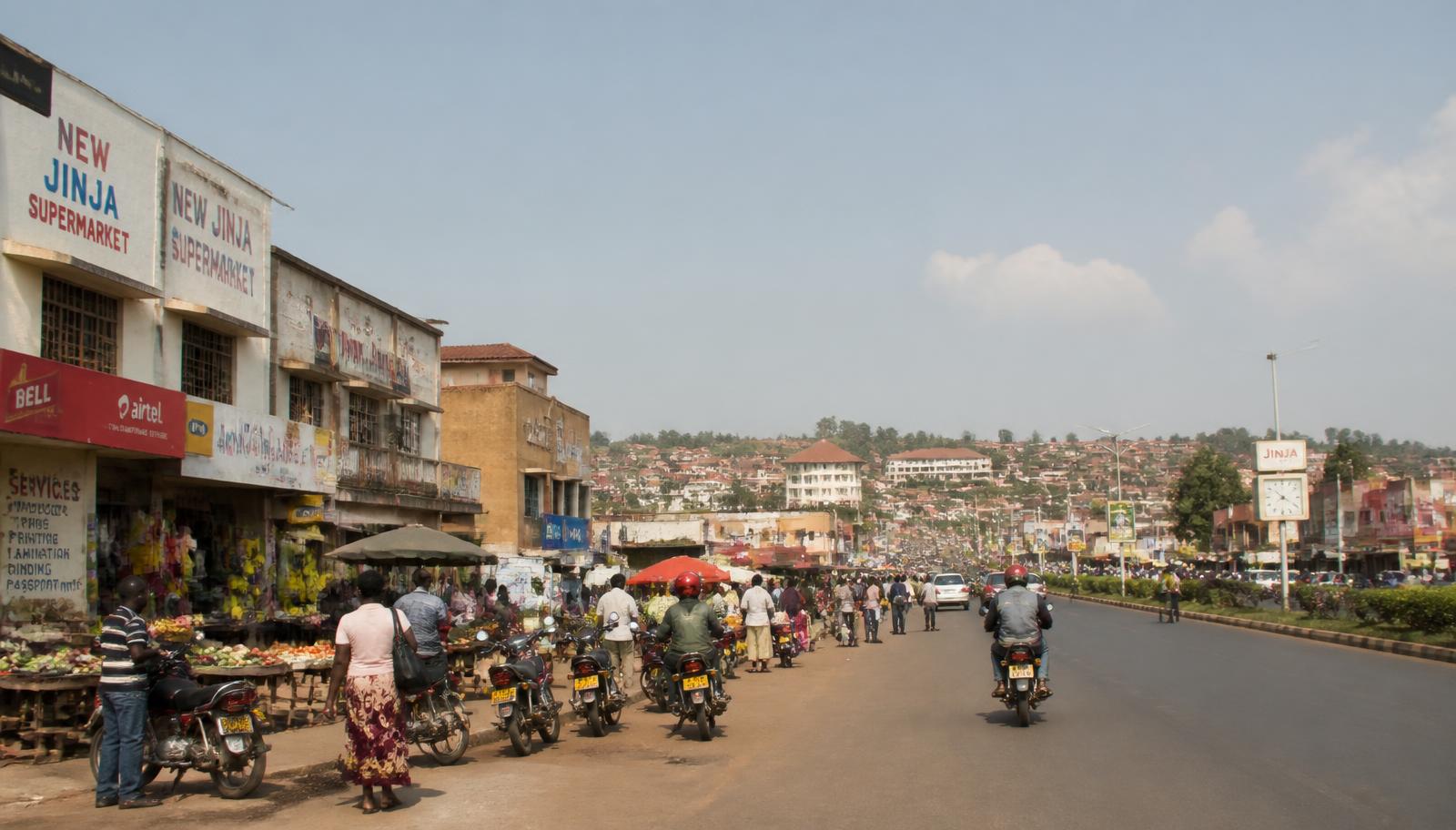
Which circumstances shape contraceptive use in Uganda’s secondary cities?
Urban residents are often assumed to have better access to health services. Yet city-wide averages can conceal substantial differences between neighbourhoods and between women living in apparently similar circumstances.
A study published in BMJ Public Health examined modern family-planning use among women in Jinja City and Iganga Municipality in eastern Uganda. The researchers asked a deeper question than whether women were using contraception: how much of the inequality in use could be connected to circumstances outside women’s control?
The study at a glance
- Setting
- Jinja City and Iganga Municipality, Uganda
- Participants
- 1,023 women aged 15–49
- Data collection
- November–December 2021
- Design
- Cross-sectional household survey
- Analysis
- Multivariable logistic regression and Shapley decomposition
- Framework
- Inequality of opportunity
- Published
- BMJ Public Health, 2025
What the researchers found
Modern family-planning prevalence was 45.6%. Among women using a modern method, 63% were using a long-acting reversible contraceptive method.
The statistical model explained 37.8% of the observed variation in predicted modern family-planning use. Within this explained portion, approximately 90% was attributed to circumstances classified by the inequality-of-opportunity framework as unfair or outside women’s control.
These circumstances included age, number of children, employment, religion, household decision-making authority, place of residence, wealth, education and marital status.
- Age17%
- Parity16%
- Employment10%
- Religion9.5%
- Decision-making authority9%
- Place of residence9%
- Wealth8%
- Education7%
- Marital status5%
These percentages describe each factor’s approximate contribution to the inequality explained by the model. They are not differences in contraceptive prevalence.
The hidden groups inside the urban average
The findings showed that the effects of education, employment, wealth and residence were interconnected.
Poorer women did not necessarily gain better access simply because they were employed, educated or living outside a slum area. Women from the poorest households who lived in non-slum areas had particularly low predicted use of modern family planning.
This is important because many urban health programmes concentrate resources in recognised informal settlements. Economically disadvantaged women living elsewhere may be less visible to programmes designed around conventional definitions of urban vulnerability.
The findings therefore challenge the idea that education, employment or urban residence provides the same advantage to every woman. The conditions surrounding those characteristics still matter, including income security, available time, service location, affordability and household decision-making power.
How the inequality-of-opportunity approach works
The inequality-of-opportunity framework separates differences associated with personal effort or choices from differences associated with circumstances outside an individual’s control. In this study, demographic, socioeconomic, religious and residential factors were treated as circumstances. Recent sexual activity was treated as the effort-related factor.
The researchers then used Shapley decomposition to estimate how much each measured factor contributed to the variation explained by the model. In plain language, the method distributes the model’s explained variation across the different predictors while considering how those predictors work together.
This approach helped move the analysis beyond identifying statistically significant associations. It showed the relative contribution of each circumstance to the inequality observed.
What researchers can learn from this study
Urban averages can hide important differences
A city-level prevalence estimate may look encouraging while particular neighbourhoods and population groups remain underserved.
Advantage depends on context
Education, employment and residence interact with wealth, time, service availability and social conditions.
Interaction analysis can reveal hidden groups
Examining predictors independently may miss combinations of circumstances that place specific groups at a disadvantage.
Explain what the model leaves unresolved
The measured variables explained 37.8% of the variation. A substantial share remained unexplained and may reflect service availability, stock-outs, distance, stigma, misinformation and other unmeasured influences.
Important limitations
- The cross-sectional design cannot establish causation.
- Family-planning use and other sensitive information were self-reported.
- A substantial proportion of inequality remained unexplained.
- Findings from Jinja and Iganga may not apply directly to larger cities.
- The classification of circumstances and effort reflects the assumptions of the inequality-of-opportunity framework.
Why the findings matter
Programmes addressing urban family-planning inequalities need to recognise the diversity that exists within cities. This includes women living in informal settlements, economically disadvantaged women in non-slum areas, informal workers and women whose employment or household responsibilities limit when and where they can seek services.
The study recommends integrating family-planning information and services into routine health-system contacts, community health-worker activities and other platforms women already use. Workplace, digital and out-of-hours approaches may also help reach women who have limited contact with conventional services.
Better routine data are also needed to identify inequalities within cities. Broad categories such as “urban,” “employed” or “educated” can conceal groups facing overlapping disadvantages.
Original research
This page is a Methods Bench summary of published research. It is not the original article.
Kananura RM, Birabwa C, Wasswa R, Ssanyu JN, Muluya KM, Namutamba S, Kyangwa M, Kizito F, Kakaire O, Mugahi R, Waiswa P. What drives inequality in modern family planning use among urban women residents? A cross-sectional analysis using the inequality of opportunity framework in Uganda’s secondary cities. BMJ Public Health. 2025;3:e002139.
Mapping the circumstances that shape your own research question?
Use the free Conceptual Framework Builder to organise constructs, relationships and pathways before writing your methods section.
Build a conceptual frameworkContinue your research
Three useful next steps, chosen for this topic.