Analytic Memo in Qualitative Research: Example and Template
Use an analytic memo to develop an interpretation, examine your assumptions and identify the evidence needed to test a developing idea.

An analytic memo is a place to develop an idea, not merely preserve what a participant said. A useful memo connects observations, interpretations, uncertainties and next steps. It allows you to see how an explanation developed rather than presenting the final theme as if it arrived fully formed.
There is no single required memo format across qualitative approaches. The structure below is a practical working option. Adapt it to your methodology and do not confuse an orderly template with a neutral researcher.
In this guide
Begin with an analytical puzzle
Imagine a fictional interview study about appointment attendance. Several participants describe missing visits despite saying that the service is important to them.
A descriptive note might say: “Participants discussed attendance barriers.” That records a topic. An analytic memo asks: “Why does valuing the service not translate into returning, and under what conditions does it?”
The second question directs you towards relationships and variation rather than a collection of statements about barriers.
Use a compact, traceable structure
Start with a date, working title, relevant transcript references and the question you are exploring. Then separate the observation from your interpretation.
For this fictional example:
Observation: Participants describe arranging transport but abandoning the visit when the expected waiting time becomes uncertain.
Provisional interpretation: Predictability may matter alongside the financial cost of attendance. The difficulty is not only whether a journey is affordable, but whether other responsibilities can be planned around it.
Alternative explanation: Participants may be using waiting time as an acceptable explanation for concerns they have not yet discussed.
Next step: Compare accounts of completed and missed visits, including cases with similar transport costs but different expectations about time.
This is an invented teaching example, not a finding from a real study.
Put your position inside the analysis
Reflexivity is more than adding a biographical paragraph to the methods section. Ask how your professional background, relationships and expectations influence what you notice and how you interpret it. Berger. Now I see it, now I do not: researcher position and reflexivity in qualitative research. 2015. provides a useful discussion of researcher position in qualitative inquiry.
If you have worked in service delivery, you might initially interpret missed visits as a scheduling problem because scheduling is something programmes can change. A memo can make that preference visible and prompt you to explore explanations beyond your professional comfort zone.
Do not claim that identifying an assumption removes its influence. The aim is more thoughtful interpretation, not an impossible declaration of having no perspective.
Return to the data without treating it as a vote
Read complete accounts around the extracts that prompted the memo. Compare different cases and contexts. A vivid quotation may be analytically useful without representing a common experience; a repeated phrase may remain superficial unless you understand its meaning.
If using reflexive thematic analysis, keep your quality practices coherent with that approach. Braun and Clarke. Thematic Analysis: Frequently Asked Questions. explains distinctions between approaches to thematic analysis; procedures such as consensus coding or reliability statistics should not be added automatically as universal requirements.
Preserve changes in your thinking
Do not overwrite an early interpretation when it changes. Add a dated update explaining what new comparison or discussion altered it. A developing memo might narrow a claim, identify a boundary or abandon an unhelpful idea.
Copy this analytic memo template
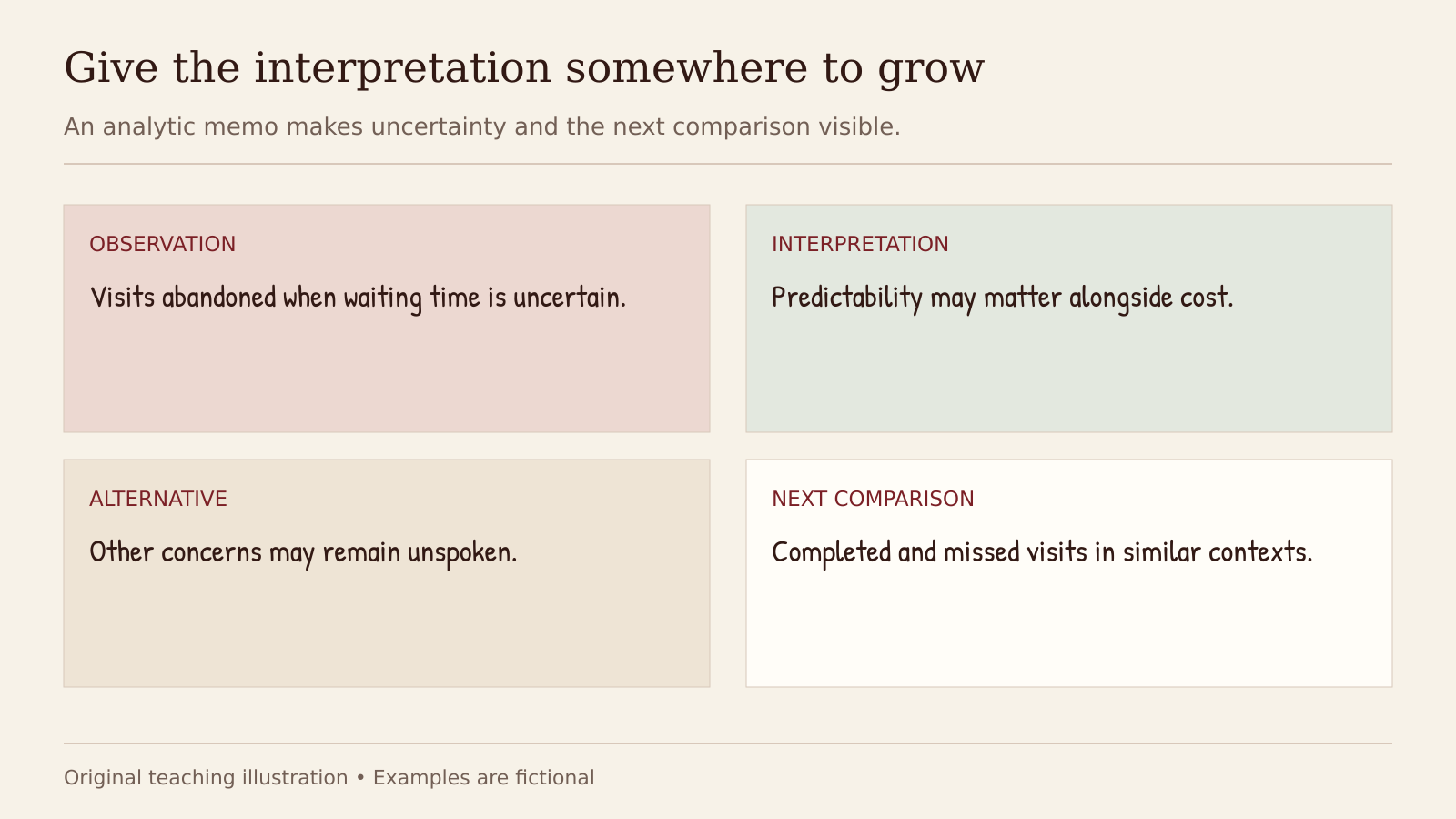
An analytic memo makes uncertainty and the next comparison visible.
| Field | Prompt |
|---|---|
| Date and working title | What question am I exploring today? |
| Data references | Which transcript passages or observations prompted it? |
| Interpretation | What relationship or pattern might explain these accounts? |
| Alternatives and contradictions | What else could explain them? Which cases challenge the idea? |
| Reflexive note | How might my position shape this reading? |
| Next comparison | What will I revisit, compare or seek next? |
| Dated update | What changed in my interpretation, and why? |
Keep transcript references in the authorised research environment. A public teaching memo should use invented examples or material approved for that use.
Before promoting a memo into a theme, ask what organising idea connects the material and whether the proposed claim is supported by more than a memorable extract. The memo is the workshop, not the finished result. Continue with the qualitative research collection when turning interpretations into a coherent findings section.
Continue your research
Three useful next steps for this topic.
Research notes, once a week
Practical research guidance, useful tools and funding opportunities in your inbox.