Synthesis Without Meta-analysis: A Practical Guide
Use structured comparisons when results cannot be pooled, without counting significant findings or writing one paragraph per study.
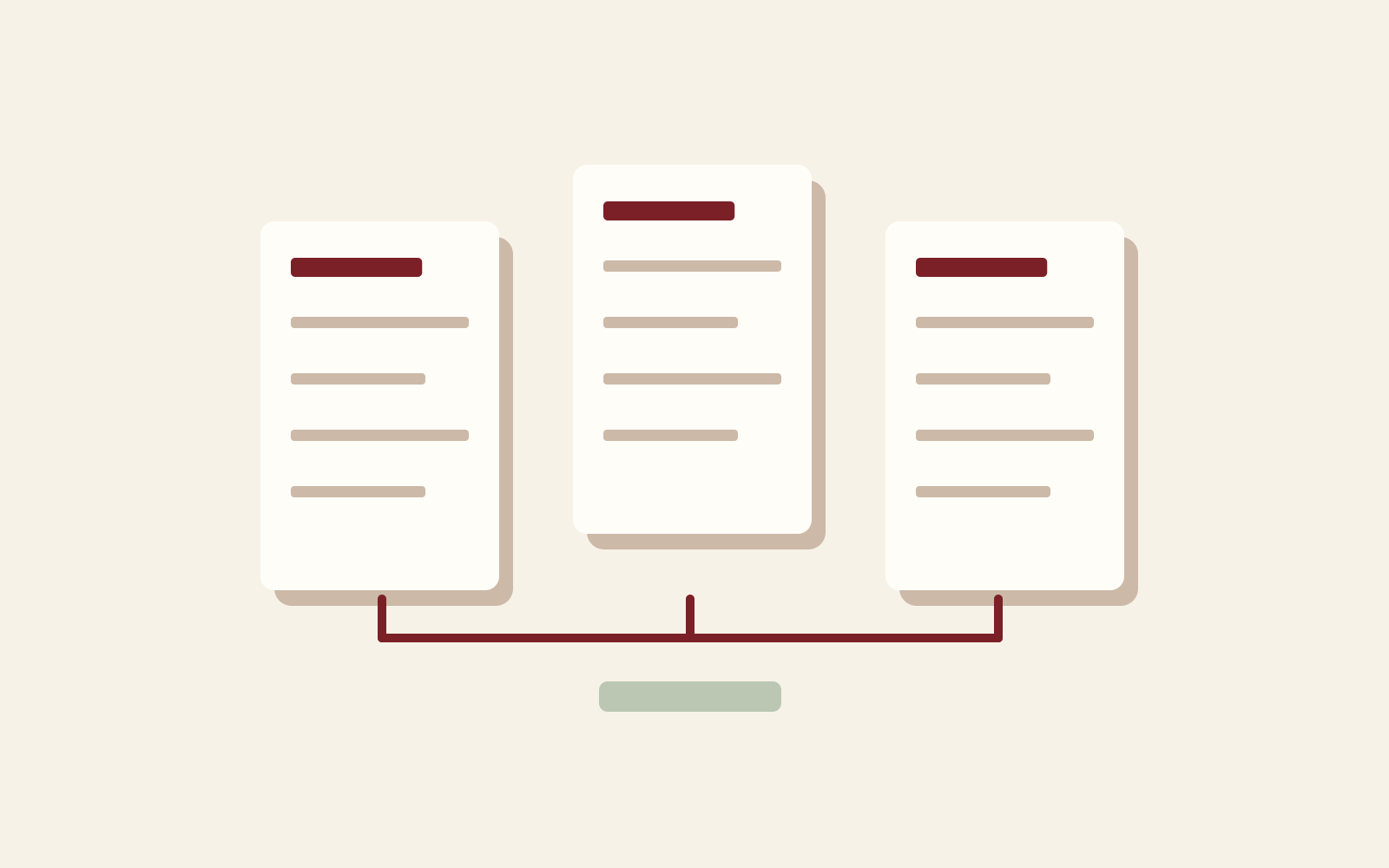
When studies cannot reasonably be combined in a meta-analysis, the alternative is not an unstructured tour of their findings. You still need a method for deciding which results belong together, how they will be compared and what conclusions the evidence can support.
“A narrative synthesis was conducted” does not explain that method. It names the space where the method should be.
In this guide
First explain why you are not pooling
Studies may differ in their populations, interventions, outcome definitions or time points. Essential numerical information may be missing. Sometimes a review contains too few sufficiently comparable estimates for the planned analysis.
Describe the actual problem. A statement that studies were “heterogeneous” is incomplete unless readers can see which differences matter. Not every difference rules out meta-analysis; the decision requires substantive and statistical judgement.
The Campbell et al. Synthesis without meta-analysis (SWiM) in systematic reviews: reporting guideline. 2020. is specifically a reporting guideline for synthesis without meta-analysis of intervention effects. It helps make synthesis methods visible; it is not a universal method for every qualitative or narrative review.
Group studies around a defensible comparison
Imagine a fictional review of appointment reminders. You have studies of text messages, telephone calls and community follow-up. Some measure attendance on the scheduled day; others measure any attendance within a month.
Do not place all those results in one paragraph and call them consistent. Start with groups that preserve the intervention contrast and outcome meaning. Separate immediate attendance from delayed attendance, and explain why your chosen groupings answer the review question.
Build a comparison table before writing
For each relevant comparison, show the intervention and comparator, outcome definition, follow-up, effect estimate and uncertainty where available, and an assessment of relevant study limitations.
An illustrative comparison might read: Study A evaluated a single text reminder against no reminder and measured attendance within seven days; Study B compared repeated calls with an existing text system and measured same-day attendance. Even if both favour the intervention, they do not estimate the same contrast.
Keep the underlying estimates visible. If a standardised metric or direction-of-effect approach is used, explain the transformation, its assumptions and what information is lost. Do not invent precision for results reported only qualitatively.
Avoid counting significant studies
“Four studies were significant and two were not” is not a reliable summary of effectiveness. Statistical significance depends on precision as well as effect size. Two studies can have similar estimated effects but different p-values.
Instead, ask about magnitude, direction, uncertainty, comparability and risk of bias. If the evidence is too incomplete for a confident conclusion, say so. A synthesis is allowed to reveal uncertainty; it is not required to manufacture a verdict.
Write a bounded conclusion
Weak: “Reminder interventions improved attendance.”
Stronger, for this fictional example: “The available studies generally favoured reminders, but differences in the comparator and attendance window prevent a single estimate of benefit. Evidence about repeated calls was particularly limited, and the findings do not establish whether calls outperform an existing text reminder system.”
The stronger version tells a decision-maker what remains unresolved. It does not imply that every reminder strategy has the same effect.
Leave an audit trail
Record the rules for grouping studies, selecting results and interpreting inconsistencies. If those rules change after seeing the evidence, explain why. Keep a table linking each synthesis statement to the studies that support or challenge it.
A useful final check is to remove the study names from your draft. Does the paragraph still communicate a comparison and a conclusion? If not, you may still have a catalogue rather than a synthesis. Explore the literature review and synthesis collection for the broader writing process.
Continue your research
Three useful next steps for this topic.
Research notes, once a week
Practical research guidance, useful tools and funding opportunities in your inbox.