Why is every sample size 384?
The famous number is not a rule. It is what happens when everyone uses the same assumptions.
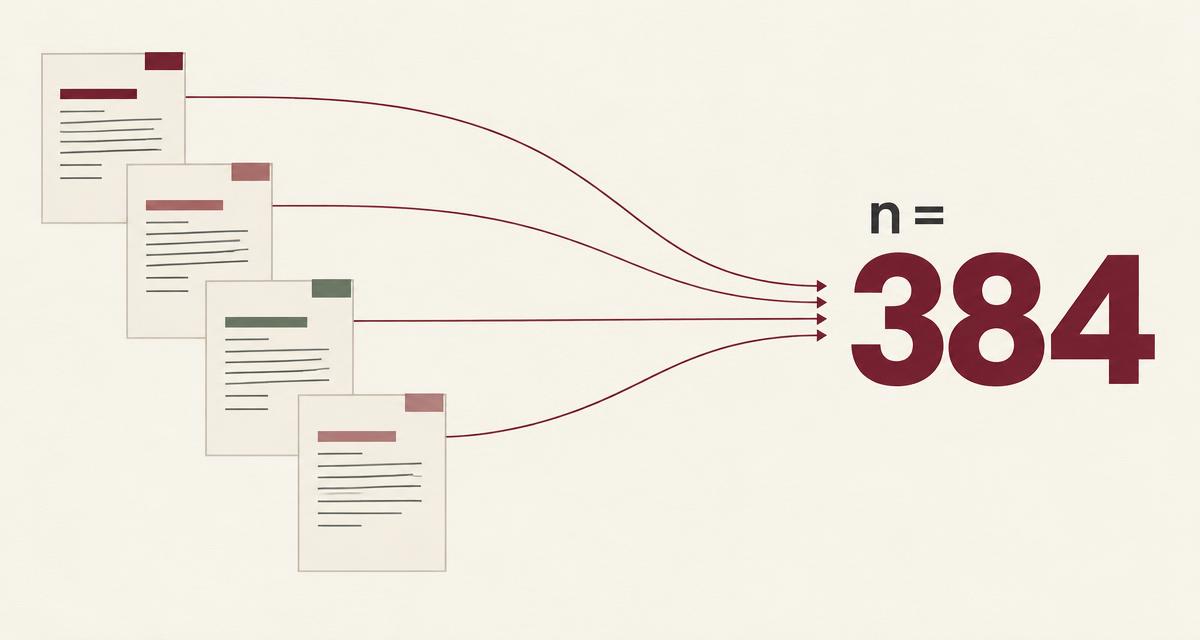
Open enough research proposals and you start to notice something.
384.
Again. And again. Different topics. Different populations. Different districts. Somehow, the sample size is still 384.
So where does that number actually come from? It is not a universal sample size. It appears when you use a familiar set of assumptions:
Change the assumptions and the number changes too.
Read
Why the assumptions produce 384, and how to choose your own.
Read: Why does every sample size seem to be 384?
Watch
See the calculation built step by step, and why changing the assumptions changes the answer.
Try
toolSample Size CalculatorChange the expected prevalence or margin of error and watch the required sample move. 384 is an answer, not a rule.Try the Sample Size Calculator →Opportunities worth a look
FellowshipFaculty for the Future 2027/28Deadline: 7 November 2026For women from eligible developing and emerging countries pursuing a STEM PhD or postdoctoral research abroad. Uganda is eligible. Best for: women in STEM with a strong academic record and an overseas host.See the opportunity →GrantAfrica-UniNet Research Cooperation ProjectsUp to €40,000 · up to 24 months · Deadline: 30 November 2026Supports collaborative research between African and Austrian member institutions. Best for: researchers who already have, or could build, an Austria–Africa institutional collaboration.See the opportunity →One Thing
If Reviewer 2 asks: “Why 384?”
“Because Cochran’s formula gave me 384” is only half an answer. The better question is: why did you choose the assumptions that produced it?
Roast My Research before Reviewer 2 does →
See you at the Bench. Methods Bench Research methods you can explain, use and defend.
Make research easier, one useful email at a time.
Practical methods, tools and new Methods Bench resources.